Mira AI Chat & Companion Review: Persona Creation and Alternative Buyer Fit
Documentation review · Updated 2026-10-08 · Adults 18+
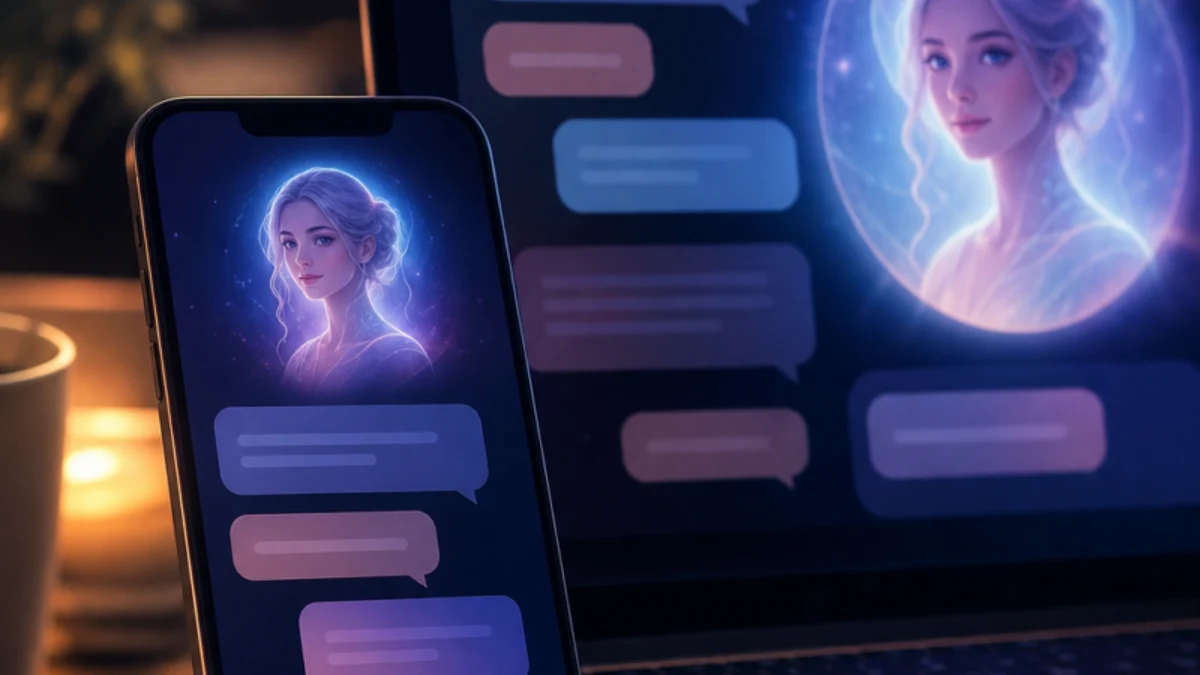
This Mira review is written for adults 18 and older who are deciding whether to invest time in an AI companion app. It is not a hands-on test, and no one paid for it. Every factual claim about the app comes from its Google Play listing at the URL above, captured October 8, 2026, plus dated user reviews shown there. The buying advice is editorial, based on how the listed mechanics and the public feedback line up with different buyer profiles. Where the listing is silent, this review says so rather than guessing. The thesis is narrow: persona creation and alternative buyer fit. That means the sections below are organized around the work of building and living with a character, and around which buyers should consider alternatives instead.
Mira is published by MINDZEN AI, which the listing identifies as MINDZEN PTE. LTD. The developer describes it as an AI character chat app with original fictional characters, voice replies, AI-generated photos and stickers, diary entries, and a memory feature. The store page labels the app Mature 17+ for sexual themes and strong language, and the app's own text says it is intended for users 18 and older and is not a substitute for professional mental health services. Those two statements set the boundary for this review. Nothing here should be read as therapy advice or as a promise of emotional outcomes.
How this review was assembled
The method is deliberately plain. I read the developer's store description line by line, noted which features are described as available and which are described only as intentions, then read the dated reviews shown on the same page. Reviews are individual testimony from specific dates, not universal proof, not a current price list, and not a guarantee that any feature works the same way today. I separated three kinds of statements throughout: developer descriptions, dated user complaints or praise, and editorial buying advice. Where the listing gives no number, I give none. That is why you will not find invented message limits, star prices, ratings, or rankings in this review.
What the developer says Mira is built to do
The listing frames Mira as more than a text chatbot. The developer describes a set of interlocking features: Inner Voice, where a user can read a character's fictional unspoken thoughts; AI Photos and Stickers, where characters react with generated images; Voice Output, where replies can be heard in a chosen tone; Deep Memory, where characters are described as remembering daily habits and shared stories; a Personal Diary that grows with conversation history; Love Q&A for choosing or creating discussion topics; Weather Reminders that use local weather with permission; Image Messages for sending pictures into chat; four chat modes named Tele, Novel, Livemoment, and a signature mode; OurSnap for posing and framing photos with a character; and PlotSnap for turning chat moments into images. The developer also states that you can now create your own character, listed under What's new.
Two economic details matter for buyers. First, the listing says Stars are used simply for sending messages, that users receive Stars upon registration, and that more can be purchased when you want to continue chatting. That is a consumable model, not an unlimited-use promise. Second, the app declares in-app purchases and says Stars are the message currency. The listing does not state how many messages a given amount of Stars buys, and this review will not invent that number.
Persona creation: what is documented and what is not
The most important line for this thesis is short: you can create your own character now. That is the developer's claim, and it is the only statement about custom persona creation in the captured listing. There is no documented walkthrough of the creation flow, no stated limit on how many characters you can make, no description of how much backstory or personality detail the creator accepts, and no explanation of how a custom character's memory behaves compared with the original cast. Buyers who care most about authoring their own persona should treat this as an advertised capability with undisclosed depth.
What is documented is the surrounding cast. The developer describes original fictional characters with distinct personalities, detailed backstories, and scenarios, naming archetypes such as brooding CEOs, childhood friends, and campus rivals. That tells you the app ships with prebuilt personas and treats them as a core product, not a placeholder. For a buyer whose main desire is to pick up an existing character and continue a story, the listing supports that path directly. For a buyer whose main desire is to author a persona from scratch and control its voice, history, and boundaries, the listing supports the existence of the feature but not its depth.
Memory, diary, and the limits of store evidence
Deep Memory is described as characters remembering daily habits, preferences, and shared stories over time. The Personal Diary is described as entries written by characters and inspired by moments together. These are among the most emotionally loaded features in the listing, and they are also the hardest to verify from a store page. The listing offers no quantified memory performance, no retention window, and no description of what happens to memory when a character is edited or when a conversation is deleted. This review will not claim otherwise.
Dated user reviews give a useful but limited signal. One review from October 2, 2026 says the writer enjoys the chats, finds the diary entries cute, and believes the characters learn about the user and keep memories, adding that other apps forget after a while. Another from October 7, 2026 praises the different personalities and the ability to play through the story the way the user wants. These are individual impressions on specific dates. They are not a measurement, and they do not establish that memory behaves the same way for every account or every character.
Chat modes, voice, and media as a fit question
The four chat modes are described by the developer as different textures: a signature mode, Tele for texting-style chats, Novel for richer storytelling, and Livemoment for more photo-filled moments. Voice Output lets a user choose a tone and hear replies as audio. AI Photos and Stickers, Image Messages, OurSnap, and PlotSnap all point to a visual, playful style of interaction rather than a text-only one. Weather Reminders add ambient check-ins when permission is granted.
This matters for persona creation because media changes what a persona can be. A Novel-mode character and a Livemoment character may feel like different products even with the same backstory, and voice adds another layer that some buyers love and others find distracting. The listing does not explain whether every mode is available for every character, including custom ones. A buyer should treat mode availability as something to verify in the app's own terms before paying.
Decision table: matching buyer intent to evidence
| Buyer intent | What the listing documents | Editorial read |
|---|---|---|
| Continue stories with prebuilt characters | Original cast with backstories and scenarios; four chat modes | Strong documented fit; the core product is built around this |
| Author a persona from scratch | Custom character creation announced under What's new | Advertised but under-documented; depth unknown |
| Prefer voice and visual reactions | Voice Output; AI Photos and Stickers; OurSnap; PlotSnap | Documented features, but no quality or frequency data |
| Want predictable spend | Stars are consumables for messages; in-app purchases | Ongoing cost is structurally possible; exact economics not stated |
| Want earned currency options | No earning mechanic described in the listing | Multiple dated reviews request ad-based or cheaper Star options |
| Want a therapy substitute | Developer explicitly says it is not a substitute for professional services | Not a fit; the developer says so directly |
Pros and cons from the documented record
Pros. The developer describes a broad, coherent feature set that supports long-form fictional connection: memory, diary, inner thoughts, voice, images, and multiple chat modes. The cast is presented as original and varied, which suits buyers who want to step into a scenario rather than design one. Custom character creation is announced, which is the headline capability for this review's thesis. The listing states that users receive Stars upon registration, so there is a documented starting point before any purchase. The developer also states that data is encrypted in transit and that deletion can be requested, both of which are relevant to buyers sharing personal stories.
Cons. Stars are consumables tied to sending messages, and the listing does not translate them into a message count, so ongoing spend is hard to forecast. The custom persona feature is announced without documented limits or behavior. The Mature 17+ label and 18+ intent mean this is not for anyone under 18, and the app carries sexual themes and strong language. The listing also notes that the app may share personal info and device or other IDs with third parties while saying no data is collected, a combination that deserves a careful read of the privacy policy rather than a quick assumption. Dated reviews describe system issues and Star pricing complaints, which are individual reports, not proof of current conditions.
Precise buying questions to ask before you commit
First, can I create a custom character today, and what fields does the creator actually accept: name, appearance, backstory, speaking style, boundaries? Second, do custom characters support the same modes, voice, diary, and memory features as the original cast, or are some features reserved? Third, how many messages does a given Star purchase cover, and does the app show my balance before each send? Fourth, can I earn Stars without paying, or is purchase the only path once the registration grant runs out? Fifth, what happens to a character's memory and diary if I delete a conversation or request data deletion? Sixth, does the privacy policy explain the third-party sharing described in the store listing, and can I limit it? Seventh, is there any way to export or preserve the stories I create, or does everything live only inside the app? Finally, what does the developer's own support channel say about the system issues users reported in October 2026? These questions are answerable before spending, and the answers will separate a good fit from an expensive experiment.
Hypothetical buyer scenarios
The following examples are illustrative and made up; they include no real prices and no claims about any product's current terms. Imagine a buyer who wants a single ongoing romance narrative with a prebuilt character and checks in most evenings. For that person, the documented cast, modes, diary, and memory are the relevant features, and the main risk is consumable message spend over months. Imagine a second buyer who wants to design an original persona with a specific history and then run a long story. For that person, the announced creation feature is the deciding factor, but the lack of documented depth means verifying it before paying is essential. Imagine a third buyer who mainly wants voice companionship and visual reactions, and a fourth who wants predictable monthly costs. The third is closer to the documented feature set; the fourth should scrutinize the consumable model and compare alternatives with clearer published terms.
Alternatives and how to weigh them honestly
Alternatives are worth considering when a documented gap matches your priority. If custom persona depth is your priority and Mira's listing does not describe it, look for products whose own documentation explains creation fields and memory behavior. If predictable spend is your priority, look for products whose documentation states how usage is metered. If you want earned currency, note that multiple dated Mira reviews request it, and check whether any alternative documents such a path in its own terms. This review makes no feature or pricing claims about any alternative; readers must check each product's current terms directly. Sponsored placements on this site are labeled, and the actions offered below are simply ways to explore alternatives, not endorsements or trials of Mira.
Frequently asked questions
Is Mira suitable for someone under 18? No. The app's own text says it is intended for users 18 and older, and the store listing carries a Mature 17+ label for sexual themes and strong language. This review is written for adults only.
Does Mira remember what I tell it? The developer describes a Deep Memory feature that remembers habits, preferences, and shared stories, and a diary that grows with conversation. The listing gives no retention window or quantified performance. Dated reviews from October 2026 include users who felt the app remembered better than others they had tried, but that is individual testimony, not a guarantee.
Can I create my own character? The listing's What's new section says you can create your own character now. It does not describe the creation fields, limits, or whether custom characters get the same features as the original cast. Treat it as advertised and verify depth before paying.
How much does chatting cost? The listing says Stars are used for sending messages, that users receive Stars upon registration, and that more can be purchased. It does not state how many messages a purchase covers, so this review does not state a number. Dated reviews in October 2026 complain that Stars feel expensive and request earning options.
Is Mira a substitute for therapy? No. The developer states directly that Mira is not a substitute for professional mental health services. One dated review describes using it when feeling sad or depressed, but that is one person's experience and not a clinical claim.
What should I check in the privacy policy? The store listing says the app may share personal info and device or other IDs with third parties, says no data is collected, notes encryption in transit, and says deletion can be requested. Those statements deserve a direct read of the developer's privacy policy before you share identifying details.
The decision
If your priority is persona creation, the documented path is real but thin: custom characters are announced, while the original cast, modes, memory, diary, voice, and media features are described in far more detail. That asymmetry is the buying signal. Choose Mira if you want to continue stories with a prebuilt cast and you accept a consumable message economy whose per-message value the listing does not state. Look at alternatives first if your priority is deep authoring control, predictable spend, or a documented way to earn currency without paying. Either way, ask the precise questions above, read the current terms, and remember that dated reviews are testimony from specific days, not a promise about today.